



Our Faith
As a Roman Catholic primary school our faith is central to our mission to provide a Catholic education, placing Christ at the centre of everything we do and strive to achieve. Our identity as Roman Catholics influences all areas of our school life.
Justice and Peace
We support and fundraise for local, national and international charities each year. We also invite visitors into school to raise awareness of justice and peace issues, and to explain how our chosen charities work with communities to offer solidarity and support.
Here are examples of our past fundraising efforts:
- Lent: CAFOD’s Lent appeal (fundraiser) and Easter Egg raffle
- Autumn: CAFOD’s harvest appeal (fundraiser)
- November: Children in Need free dress day (fundraiser)
- Advent: Apostleship of the Sea: packed woolly hats with men’s toiletries for seafarers in local ports on Christmas day.
Catholic Life of the School
Catholic Life
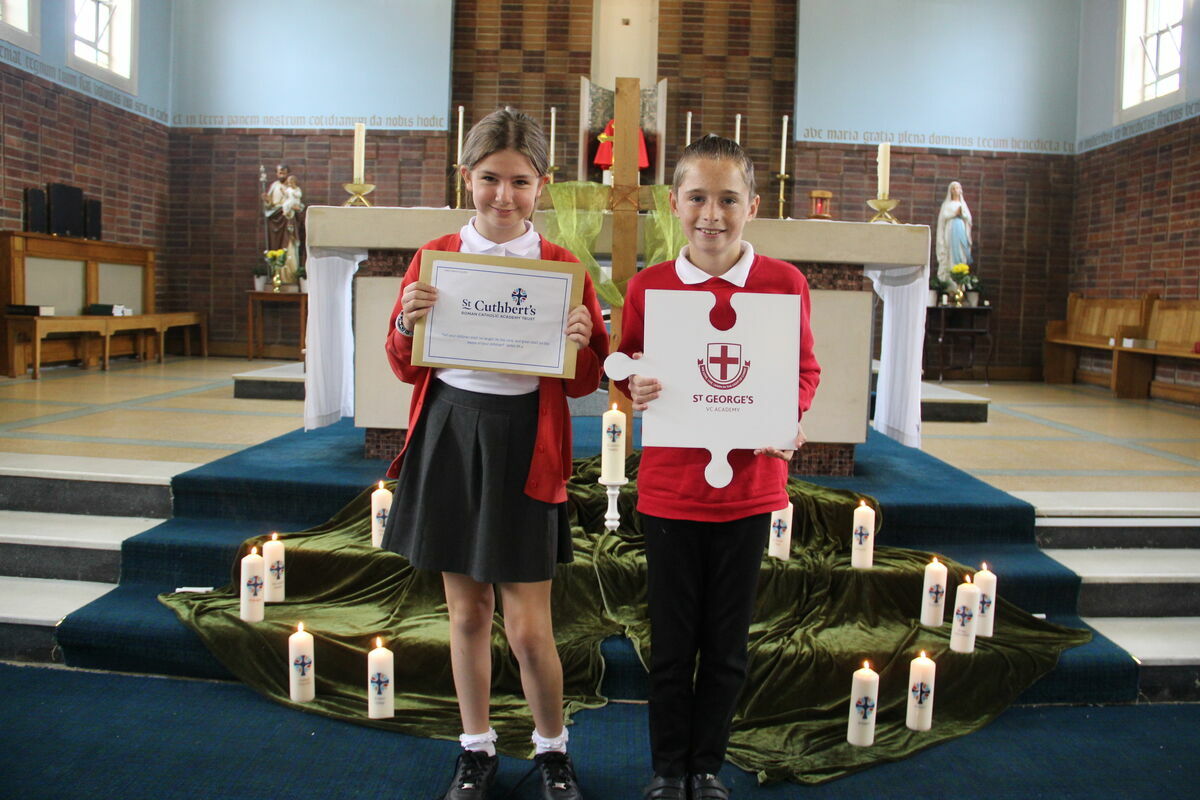
The Gospel Values, drawn from the Beatitudes, are central to life at St George's. They can be seen clearly in the way that we treat each other and the importance that we place on strong, caring relationships. High expectations of, and aspirations for, each other are vital in ensuring that everyone in our school community becomes the absolute best that they can be. As a Catholic school, we aim for everyone to reach their true potential, not only academically, but also spiritually, socially and emotionally.
All that happens in St George’s Primary School is formed by our faith. Our aims and relationships, our curriculum, pastoral care and behaviour policy all have the potential to speak of God’s loving care for each individual.
The children’s spiritual development is seen as fundamental and is the foundation of our school. Religious Education is not just a subject but part of everyday life.
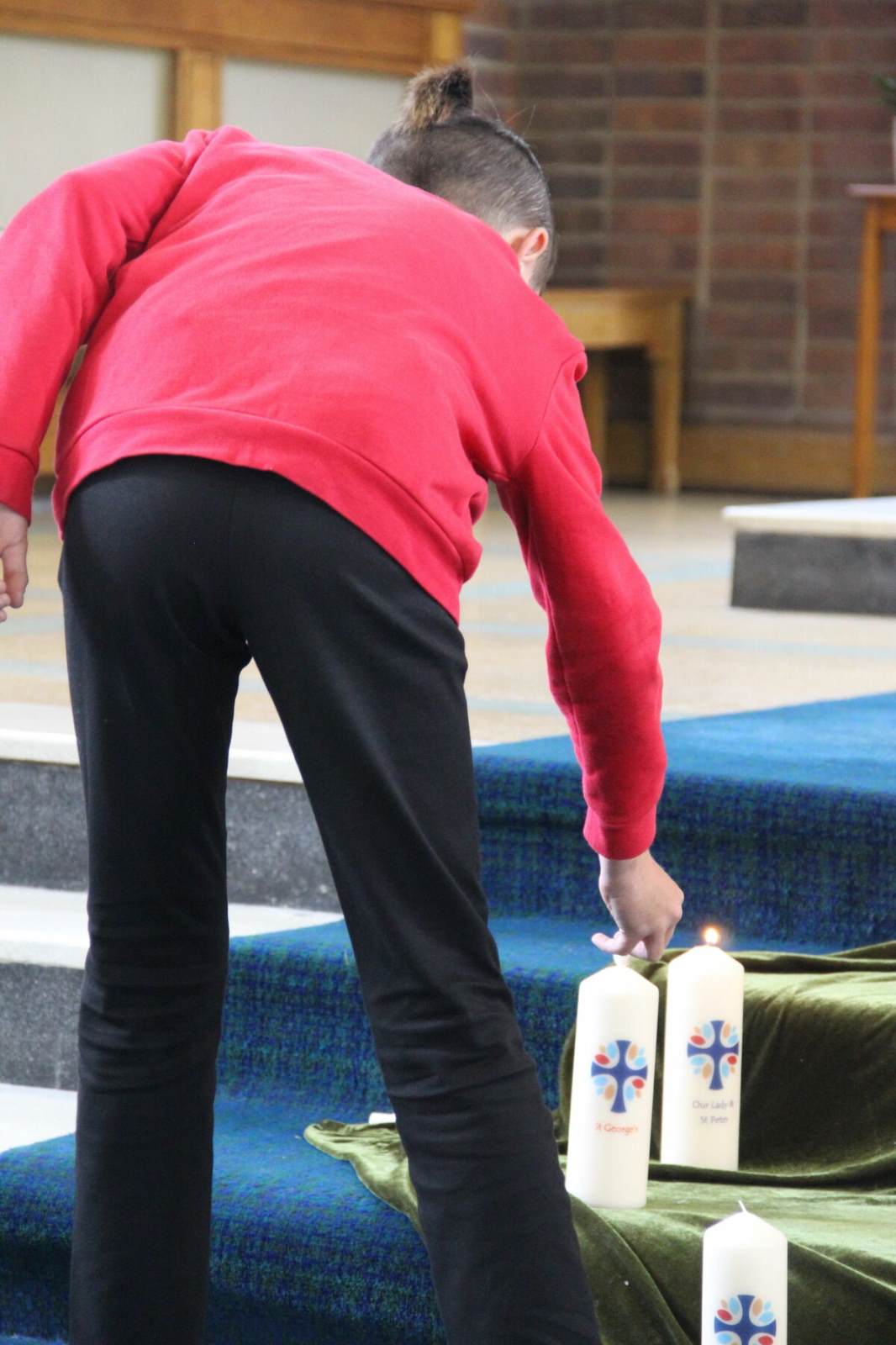
The assemblies and school Masses are important occasions where the children may experience shared prayer and worship and encounter the presence of God.
Different classes take it in turns to read and lead prayers, preparing for these occasions with enthusiasm.
Chaplaincy
At St George's, we have a lay chaplain Juliet Kaye who works as part of the St Cuthbert’s Trust Chaplaincy Team.
Our wonderful chaplaincy team play a vital role in our school and our trust ensuring that the Chaplaincy mission is central to our school life.
Together, they enhance the prayer life of our children encouraging them to recognise God in each other and the world around them whilst developing their experience of prayer. They support our Junior Chaplains, prayer groups and our Mini Vinnies. In each classroom sacred spaces have been developed. Our chaplaincy leads in school plan prayer and liturgy for the week ahead and provide their classes with exciting and interesting ways to pray and worship.
Our chaplains also liaise with the Parish to ensure that our links with the community remain strong, with opportunities to come together regularly.
Collective Worship
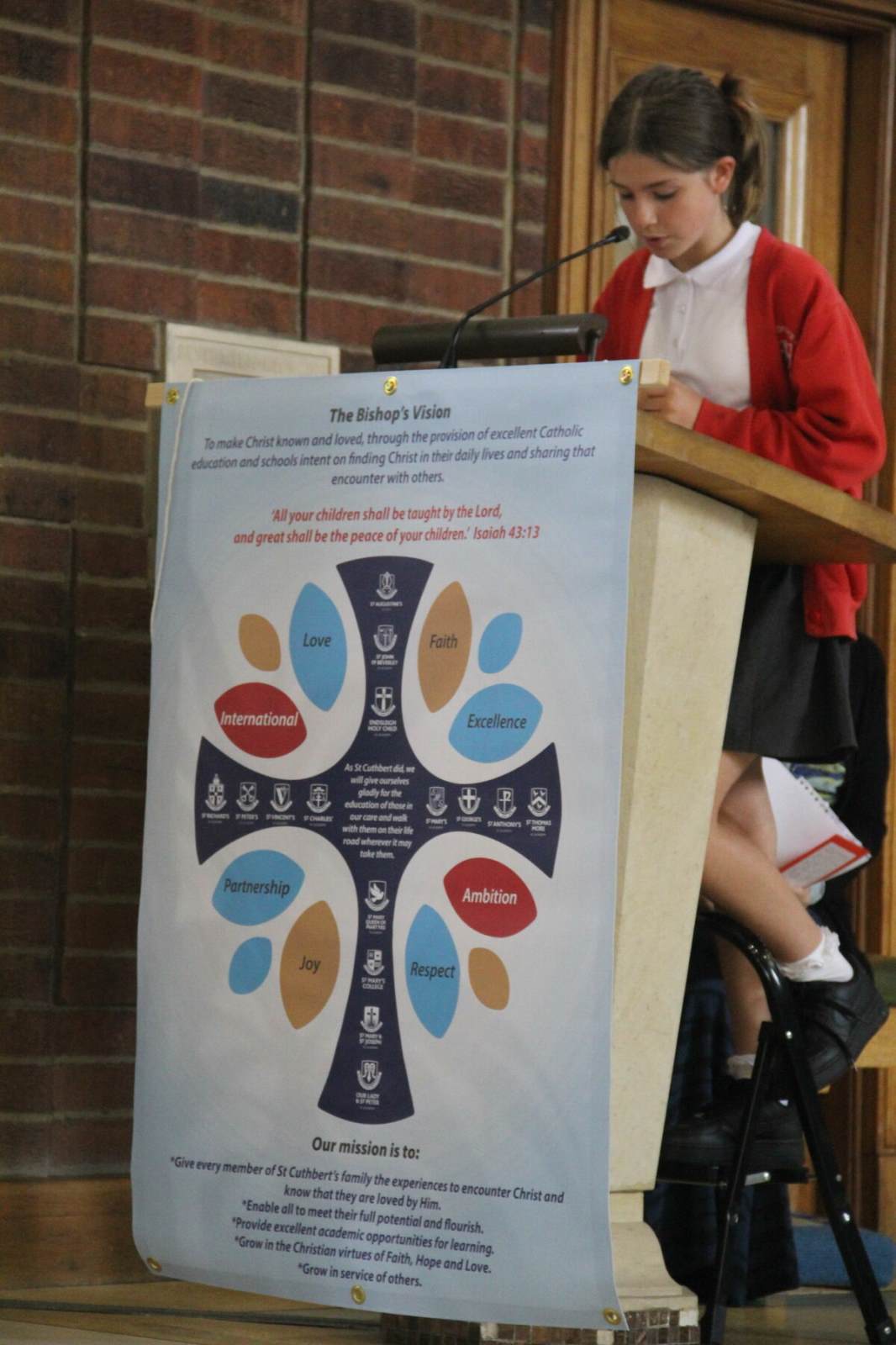
Christ is at the centre of all of our thoughts and actions and because of this, Collective Worship is a much-valued part of life at St George's.
We love coming together in classes or as a whole school to worship daily allowing our children, staff, parents and parishioners to know, serve and love God. By listening to and reflecting upon the Word of God, we allow the messages of the Bible to shape our lives so that we can develop and nurture a closer relationship with Jesus.
Feast Days & Special Celebrations
In addition to our weekly acts of worship, we also celebrate important liturgical feast days with special whole school liturgies or Masses, including Remembrance, All Saints Day, Advent, Christmas, Epiphany, Ash Wednesday, Lent, Easter, Ascension and Pentecost.
We also share special Services of Reconciliation during Advent and Lent as part of our preparation for the great feasts of Christmas and Easter.
Diocese of Middlesbrough
|
The Roman Catholic Diocese of Middlesbrough is home to 56 schools and academies providing Catholic education to just over 17,700 children and young people.
The Diocese covers the large historic geographical area of the ‘North Riding’, with schools and academies in the 7 Local Authority areas of Redcar & Cleveland, Middlesbrough, Stockton on Tees, North Yorkshire, York, East Riding and Hull.
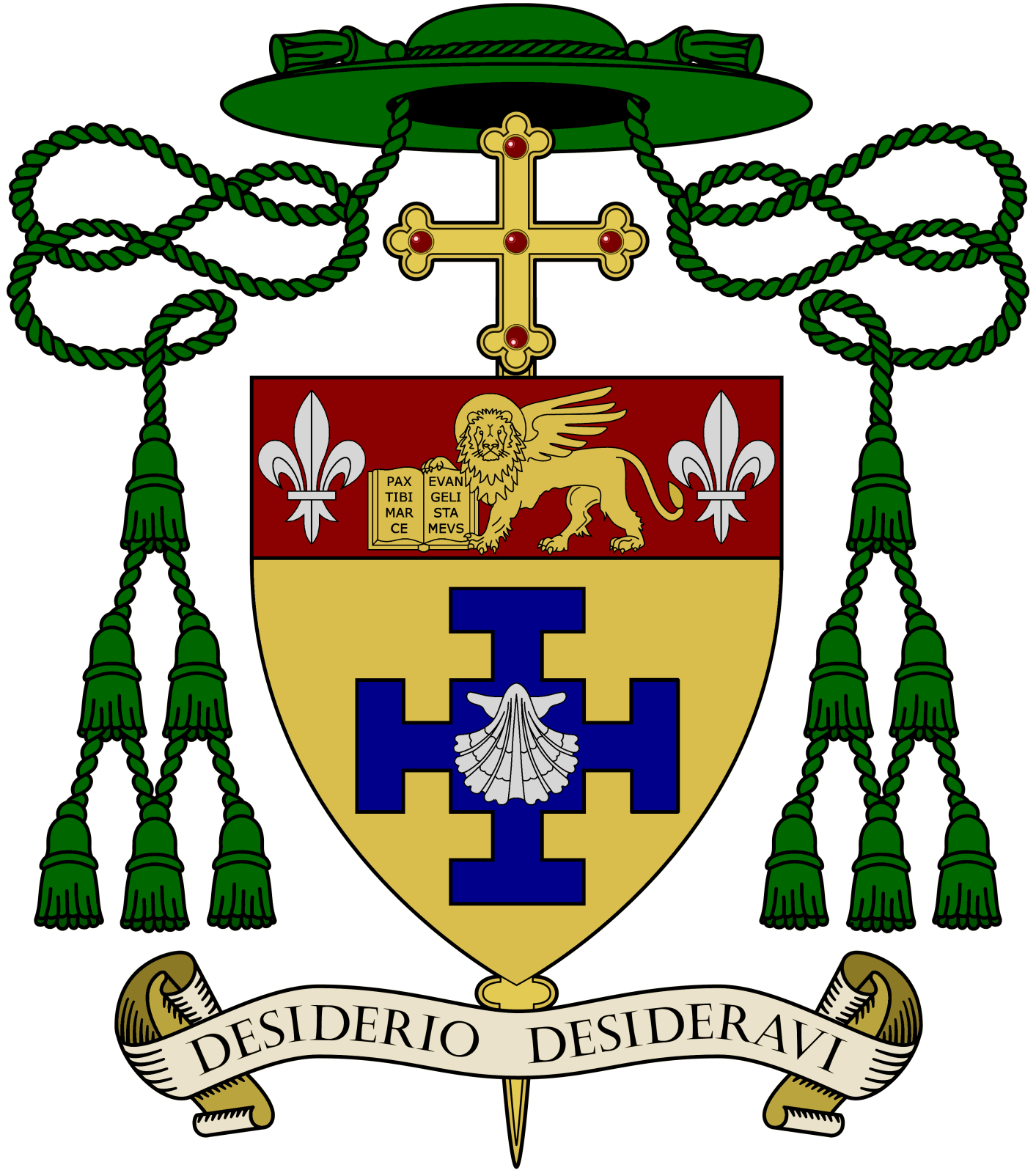
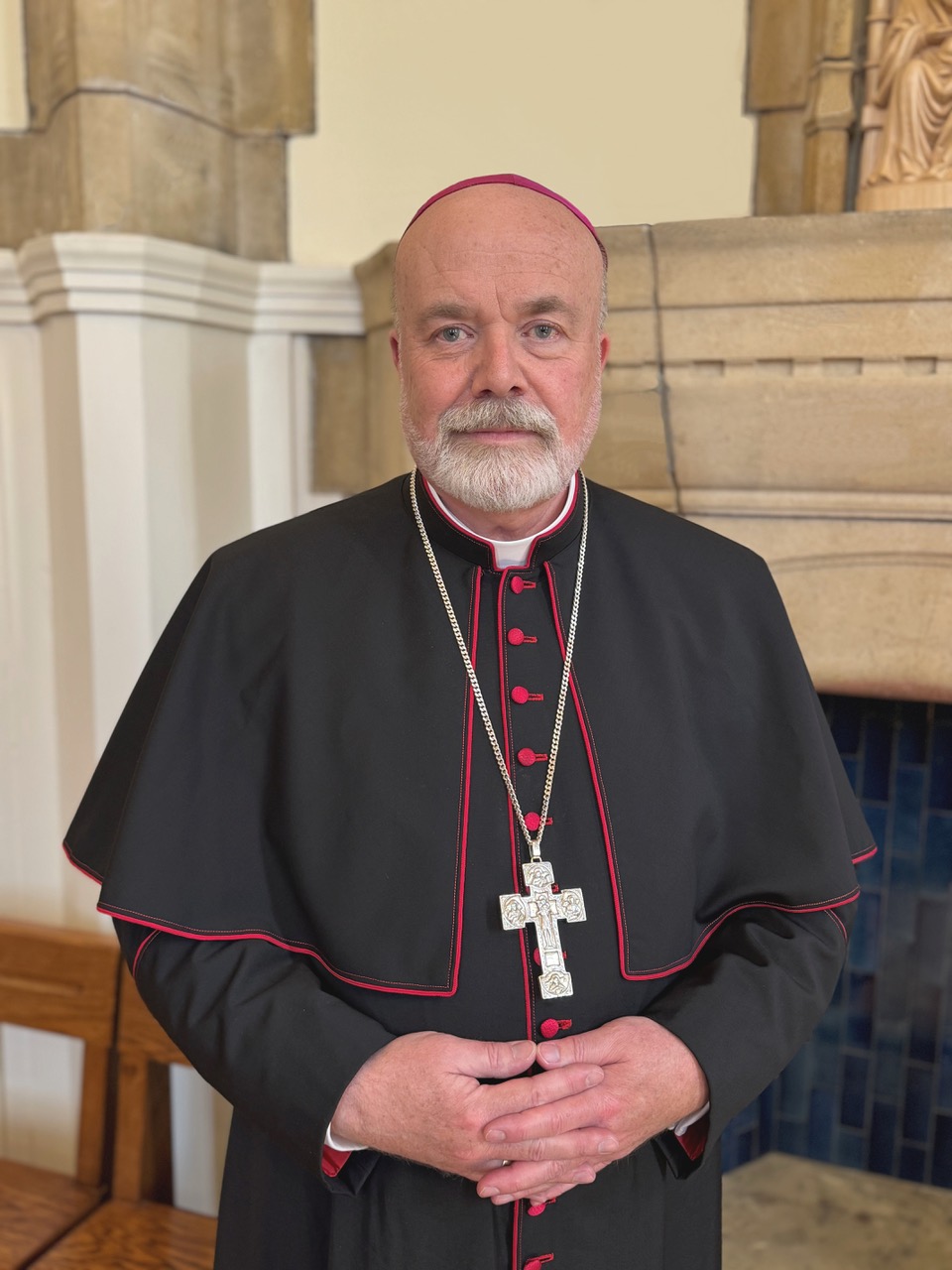
The diocese is led by Bishop Marcus Stock, the Apostolic Administrator of the Middlesbrough Diocese (& Bishop of the Leeds Diocese) who provides Catholic schools to help him as first educator of the Diocese in his mission of making Christ known to all people.
Bishop Stock was born in London in 1961, was ordained a priest in 1988 and ordained and installed Bishop of Leeds on 15th September 2014 and installed as the Apostolic Administrator of Middlesborough on 22nd December 2025.
We are guided and overseen on Christ's journey to knowing and loving him more fully by our Bishop. Our Bishop's vision is: To make Christ known and loved, through the provision of excellent Catholic education and schools intent on finding Christ in their daily lives and sharing that encounter with others.
It is the mission of all Diocesan schools to contribute to the creation of a society that is highly educated, skilled and cultured making a contribution to the common good of society and its culture |
https://middlesbrough-diocese.org.uk/
Our School Saint
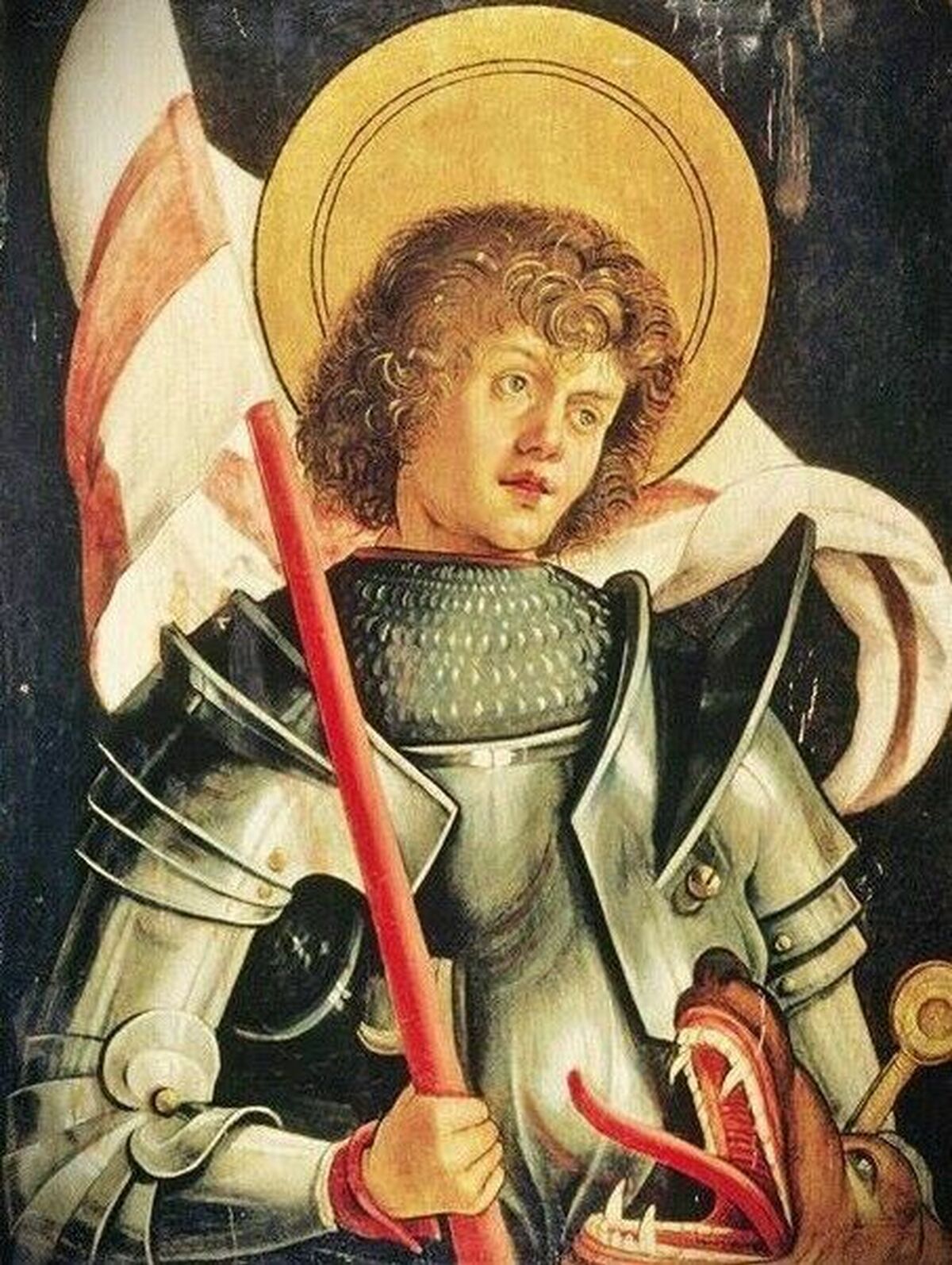
Our school saint is St George
Feast day: 23rd April
Saint George is the patron saint of England. He's popularly identified with England and English ideals of honour, bravery and gallantry - but actually he wasn't English at all. Very little, if anything, is known about the real Saint George. Pope Gelasius said that George is one of the saints "whose names are rightly reverenced among us, but whose actions are known only to God."
Things you might not know about St George!
ST GEORGE WASN'T ENGLISH...
St George might be hailed as a English national hero, but he was actually born – in the 3rd century AD – more than 2,000 miles away in Cappadocia (modern day Turkey). He is thought to have died in Lydda (modern day Israel) in the Roman province of Palestine in AD 303. It is believed that his tomb was in Lod and was a centre of Christian pilgrimage.
... AND HE WASN'T A KNIGHT EITHER
Although George is often depicted in popular culture as a knight in shining armour, the truth is less fanciful. Whilst St George was depicted from the 11th century as a chivalric knight or a warrior on horseback, it is more likely that he was an officer in the Roman army.
ST GEORGE WAS A MARTYR ...
Like many saints, St George was described as a martyr after he died for his Christian faith. It is believed that, during the persecutions of the Emperor Diocletian in the early 4th century, St George was executed for refusing to make a sacrifice in honour of the pagan gods
... BUT HE NEVER VISITED ENGLAND
Although St George never visited England, his reputation for virtue and holiness spread across Europe and his feast day (23rd April) was celebrated in England from the 9th century onwards. He became popular with English kings. Edward I (1272-1307) had banners bearing the emblem of St George (a red cross on a white background) and Edward III (1327-77) had a strong interest in the saint and owned a relic of his blood. The St George cross was not used to represent England until the reign of Henry VIII.
THE DRAGON WAS ADDED LATER
The story goes that St George rode into Silene (modern day Libya) to free the city from a dragon who had a taste for humans, but it’s a story which post-dates the real George by several centuries. Images of George and the dragon survive from the 9th century – 500 years after his death. Originally these may simply have been representations of the battle between Good and Evil. But the story was developed and popularised in the Middle Ages in a compendium of stories about saints’ lives, The Golden Legend.
ST GEORGE WAS A SAINT FOR 1000 YEARS BEFORE THE 'HOLIDAY'
St George was canonised in AD 494 by Pope Gelasius, who claimed he was one of those 'whose names are justly revered among men but whose acts are known only to God'. A feast day of St George has been celebrated in England for hundreds of years on 23rd April, which was possibly the date of his martyrdom. Following the Battle of Agincourt in 1415, St George's Day became one of the most important feast days in the English calendar.
ENGLAND ISN'T THE ONLY COUNTRY TO CELEBRATE ST GEORGE
St George is truly an international saint and England is not the only country or region to claim him as its patron.
England shares St George with Venice, Genoa, Portugal, Ethiopia and Catalonia among others as their patron saint and many of these places have their own celebrations and ceremonies in his honour.
PEOPLE TURNED TO ST GEORGE FOR PROTECTION
During the Middle Ages, people believed that St George was one of the 'Fourteen Holy Helpers' – a group of saints who could help during epidemic diseases. St George's protection was invoked against several nasty diseases, many fatal and with infectious causes, including the Plague and leprosy.
From around 1100, St George’s help was also sought to protect the English army. In William Shakespeare’s Henry V, the monarch calls on the saint during his battle cry at the Battle of Harfleur in the famous “Once more unto the breach, dear friends” speech, crying “God for Harry! England, and St. George!” Five hundred years later – during the First World War – a ghostly apparition of St George is said to have aided British troops during their retreat from Mons, and the naval commander of the Zeebrugge Raid cited the saint as inspiration.
ST GEORGE REPRESENTS THOSE WE HONOUR
The Order of the Garter (founded by Edward III in 1348) is the highest order of chivalry in the country. To this day St George’s cross still appears on the Garter badge and his image is the pendant of the Garter chain. In 1940 King George VI created a new award for acts of the greatest heroism or courage in circumstance of extreme danger. The George Cross, named after the king, bears the image of St George vanquishing the dragon. The image of St George also adorns many of the memorials built to honour those killed during World War One.
Our Parish Church
St George's Catholic Church
Moor Lane
Eastfield, Scarborough. YO11 3LW
Tel: 01262 424753
Email: catholicstarofsea@gmail.com
Web: https://middlesbrough-diocese....
Clergy: Rev Albert Schembri (c/o. 32 Victoria Road, Bridlington. YO25 2AT)
Holy Mass is offered at these times:
Sunday mass: 4pm Saturday
Holy days: 10am
Monday: 10am
Confessions
Before or after Mass on request
Facilities
Full access facilities for wheelchairs (access plus disabled toilet)
Loop system for hearing-aid users.
First Holy Communion
The Parish helps our children to prepare fully for the Sacraments of Reconciliation and the Eucharist. Baptised Catholic children from Year 3 upwards may apply to Father Albert to join the preparation programme, which runs from January to June each year.
We try to make it a living faith for the children, sharing our belief in a variety of ways. “Each of us hears, celebrates and lives our Catholic faith in the experiences of our daily lives, not in a vacuum.”
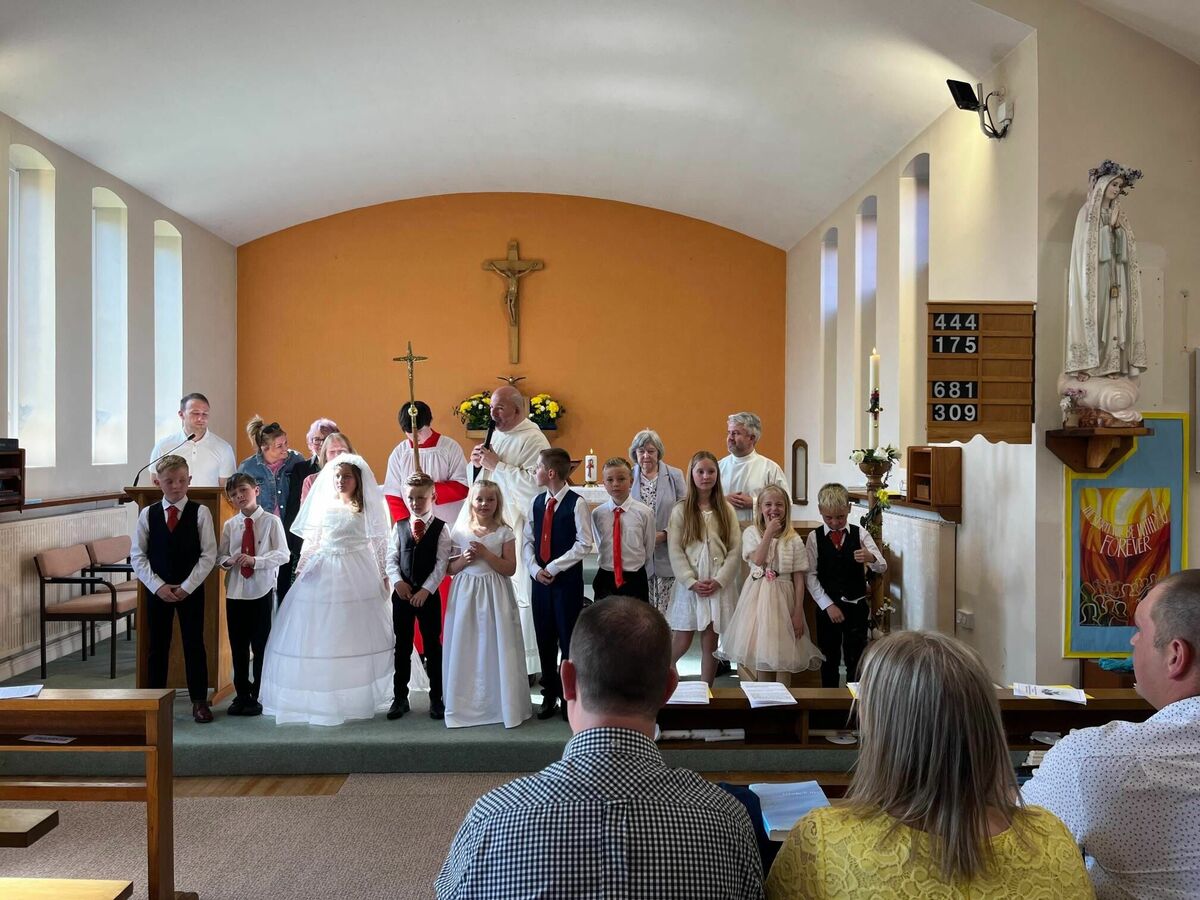
St George's is a church-cum-hall built on the outlying Eastfield district in 1957. An independent parish from 1965 (Architect: Francis Johnson of Bridlington).
A modest design by the Bridlington architect Francis Johnson, built as a combined church and hall.
The church was originally built as a combined church and hall (cost £15,000), to serve the expanding housing estates of Eastfield, southwest of Scarborough. Mass had previously been said in Eastfield Community Centre. The building was enlarged after a separate parish was created in 1965 but reverted to use as a chapel-of-ease in 1999.
Description
A long rectangular building, red brick with pantile roof. Church hall at one end, church at the other, divided by a folding screen enabling the two to be thrown together. The appearance of the building is more that of a church hall or community centre than an ecclesiastical building, i.e. domestic-style windows, doors and proportions. The original windows are of Crittall type with square leaded glazing. 1980s addition along the entrance side of the building, comprising a lean-to kitchen and other service facilities and gabled entrance bays, the church entrance with a larger segmental arch and glazed screen.
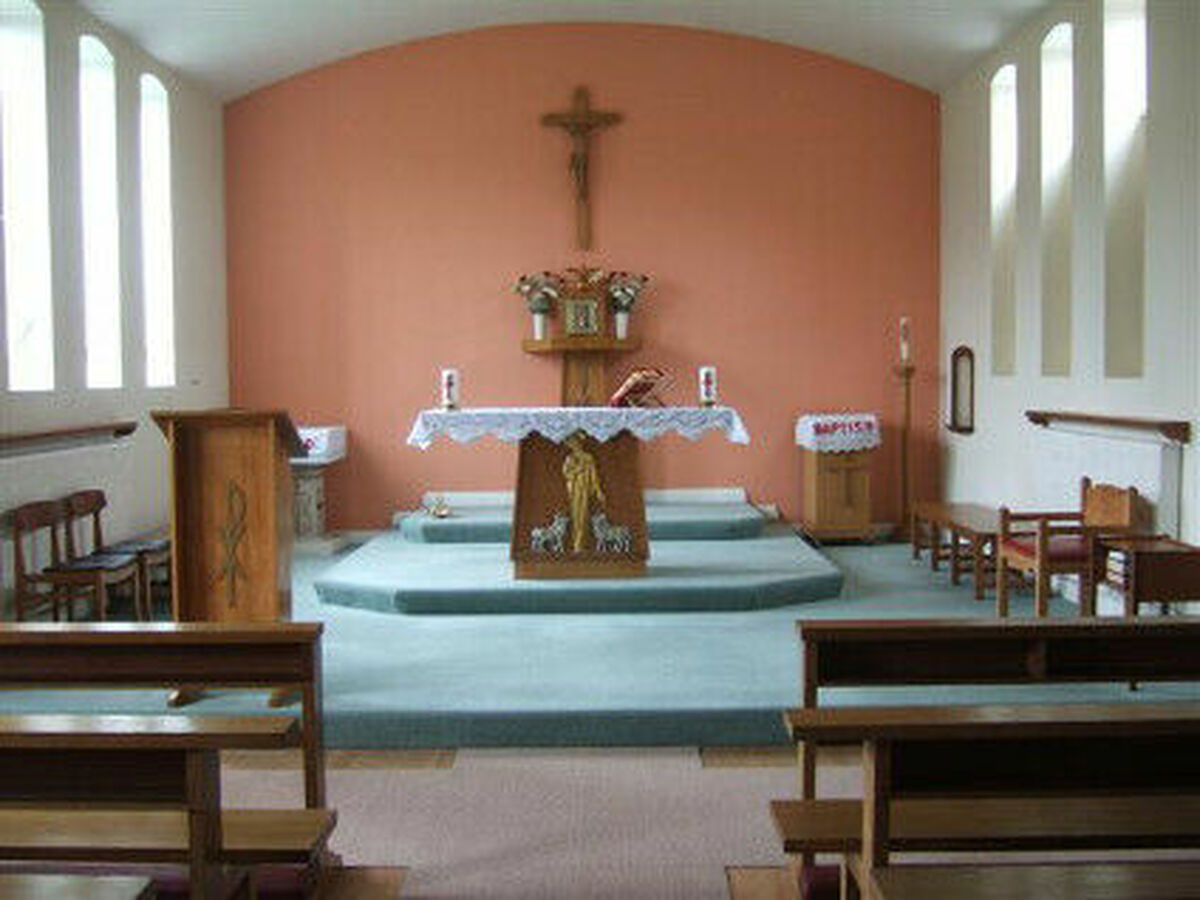
The interior has wooden pews (from the demolished Houghton Hall chapel) and sanctuary furnishings of 1957 or later, but all of a piece. There are small recesses for side chapel and electronic organ
Religious Education & RSE
The RE Curriculum
Learn more about our RE Curriculum hereRSE Curriculum: Ten Ten
Ten Ten’s new programme for Catholic primary schools, Life to the Full, will teach Relationships Education and Health Education within the context of a Christian understanding of human sexuality rooted in the wisdom and teaching of the Catholic Church.
Given that RHE (Relationships and Health Education) will become a statutory subject for all schools from September 2020, we are embracing “the challenges of creating a happy and successful adult life” by giving pupils knowledge “that will enable them to make informed decisions about their wellbeing, health and relationships” (DFE Statutory Guidance).
We will deliver this teaching through the prism of Catholic RSHE. The framework of our programme is taken from the Model Catholic RSE Programme by the Catholic Education Service, which has been highlighted by the Department of Education as a work of good practice.
Please click on the document links below for further information:
Ten Ten – One page overviewTen Ten – Overview by key stagesTen Ten – detailed information of the programmehttps://www.tentenresources.co.uk/
Please do not hesitate to contact school should you require any additional information.
DOWNLOADS
-
CS-Year-Overview-2024-25
download_for_offline
download_for_offlineCS-Year-Overview-2024-25
- Prayer-and-Liturgy-Policy download_for_offline
download_for_offlinePrayer-and-Liturgy-Policy
- RE-policy download_for_offline
download_for_offlineRE-policy
- Spiritual-Sequencing-RE download_for_offline
download_for_offlineSpiritual-Sequencing-RE
School Prayers
Sign of the Cross
In the name of the Father and of the Son and of the Holy Spirit. Amen
Morning Offering
O my God I give to you,
All that I think, or say, or do.
All my work and all my happy play,
I will give to you today.
Amen
Grace before meals
Bless us Oh Lord as we sit together.
Bless this food we eat today.
Bless the hands that made the food.
Bless us Oh Lord.
Amen
Grace after meals
Thank you, God, for the food we have eaten.
Thank you God for all our friends.
Thank you God for Everything.
Thank you God.
Amen
End of the day prayer
God Our Father, we come to say thank you for your love today.
Thank you for my family and all the friends you give to me.
Guard me in the dark of night. And in the morning send your light.
Amen
Worship team & Mini Vinnies
Children in Years 5 and 6 can apply to be part of the Worship team, who organise music for worship and lead liturgies with their own class and with younger children.
We also have a team of 8 Mini Vinnies who are selected from across our KS2 classes. They are led by Miss Abbey and 'turn concern into action!'
- Prayer-and-Liturgy-Policy download_for_offline
St Cuthbert's Roman Catholic Academy Trust
The Trust, initially formed with the two schools of St Mary Queen of Martyrs and Endsleigh Holy Child to begin a journey to work within a close and established structure to maintain high standards of Catholic education.
Visit Site